

Senegal’s bettors protest 20 per cent tax on gambling winnings with 72-hour strike

Senegalese players staged a nationwide 72-hour boycott, criticising the new 20 per cent tax on winnings as unfair and warning it could push gamblers toward unregulated platforms.
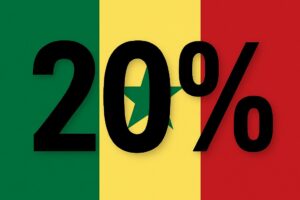
Senegal.- Bettors across Senegal launched a coordinated 72-hour strike in protest against the government’s newly implemented 20 per cent tax on gambling winnings, a levy they argue could undermine the regulated betting market and drive players toward unlicensed alternatives.
The action, which began on November 3, involved bettors refusing to play all games nationwide. Bettor associations described the tax as both a “spoliation” (exploitation) and an “arnaque” (scam) according to a Seneweb report.
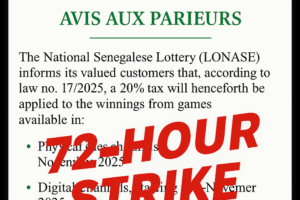
The 20 per cent tax, introduced by the National Lottery of Senegal (LONASE) under Law No. 17/2025, took effect on November 1 for physical outlets and rolled out to digital platforms on November 15. The levy is automatically deducted at payout, meaning a win of CFA 100,000 (€152) now yields CFA 80,000 (€122) to the player, with the remainder remitted to the Treasury.
In an official LONASE notice, authorities describe the measure as a “civic contribution” to national development and a step toward formalising and modernising the gambling sector, although bettors continue to voice strong concerns over reduced net winnings.
According to Seneweb, bettors who have long criticised low payouts said the tax “has all the marks of exploitation and cannot gain their support”. The report also stated that associations took to social media to announce their strike. “They announced the boycott of all games, now of no interest to them, rejecting any negotiations on what they consider a scam.”
Strike disrupts betting across key regions
Regional media coverage indicates the strike had wide reach. Reports from La Nouvelle Tribune and Sud Quotidien, stated that bettors’ associations in the cities of Dakar, Thiès, Rufisque, Ziguinchor and Matam participated. Several retail outlets reported noticeably reduced activity during the boycott, and some were “quiet” as the strike took hold.
Associations have also warned that they may turn to foreign online platforms via mobile money to bypass the tax. Bettor associations and commentators warn that a move to offshore or unregulated platforms, facilitated by mobile-money payments, could undercut licensed operators and weaken traceability and regulatory oversight.
The tax forms part of the broader Economic and Social Recovery Plan (PRES) and is seen by authorities as a measure to improve transparency, traceability and revenue collection in the gambling sector.
Yet the strike highlights the sensitivity of regulated betting markets to taxation and the potential for strong backlash if measures are perceived as unfair.