


Kenya proposes 20% gambling winnings tax under Finance Bill 2026 as public participation deadline nears
Proposed reforms could reshape Kenya’s betting tax framework while expanding oversight of gambling withdrawals, digital transactions and virtual assets
Kenya.- Kenya has proposed a 20 per cent tax on gambling winnings under the Finance Bill 2026, potentially reshaping parts of the country’s existing 5 per cent betting tax framework. The proposed reforms form part of a wider overhaul of Kenya’s betting tax regime, with public participation set to close on May 25.
The bill, tabled in Parliament on April 30, entered public participation on May 11 after the National Assembly invited written and oral submissions before review by the Departmental Committee on Finance and National Planning.
The government plans to impose the 20 per cent withholding tax on gambling winnings for both residents and non-residents under the proposed amendments. The move marks a potential reversal of Kenya’s June 2025 betting tax reforms, which shifted the market towards 5 per cent taxes on betting deposits and withdrawals.
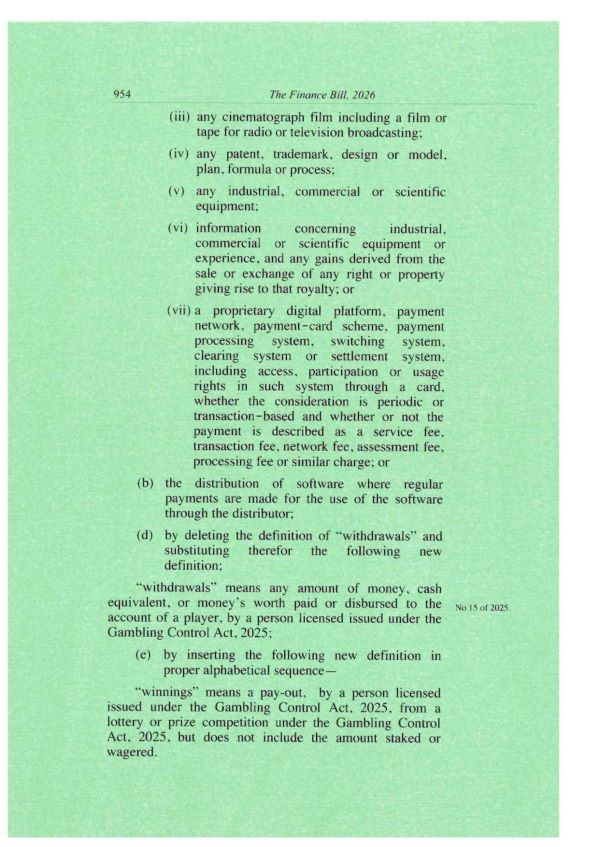
The Finance Bill 2026, dated May 5, states that a withholding tax rate of “twenty per cent” would apply on winnings under amendments to the Third Schedule of the Income Tax Act.
African corporate law firm Cliffe Dekker Hofmeyr, in a legal analysis of the Bill published on its website, said the bill proposes “introducing a 20 per cent withholding tax (WHT) rate on winnings” for both residents and non-residents, adding that the changes “show a reversion to the earlier tax position” prior to the Finance Act 2025 reforms.
The firm also said the amendments would extend taxation to “WHT at 5 per cent on withdrawals and 20 per cent on winnings” from betting or gaming wallets, while seeking to “widen the definition of amounts deposited” to include funds “converted into chips, tokens, credits or similar instruments” used in gambling transactions.
Expanded gambling oversight measures
The Finance Bill additionally defines “winnings” as “a pay-out from licensed betting, gaming, lottery or prize competition operators, but does not include the amount staked or wagered”, while also defining “withdrawals” as “any amount of money, cash equivalent, or money’s worth paid or disbursed” from gambling accounts.
The Bill further proposes tighter oversight of digital transactions and virtual assets within Kenya’s wider tax framework. The wider Finance Bill also contains broader tax and digital payment provisions beyond gambling.
The Finance Bill 2026 forms part of Kenya’s wider effort to raise additional government revenue through expanded taxation and stronger digital transaction oversight. Kenya remains one of Africa’s largest betting markets, with mobile wagering through platforms such as M-Pesa driving strong growth in sports betting and online gambling participation.
The proposals have drawn mixed reactions across Kenyan media, legal circles and gambling industry discussions, with supporters arguing the measures could increase tax revenue and strengthen oversight, while critics warn higher taxes could push bettors towards offshore and unregulated operators.