


Africa faces accelerated gambling taxes across multiple countries, rocking betting markets
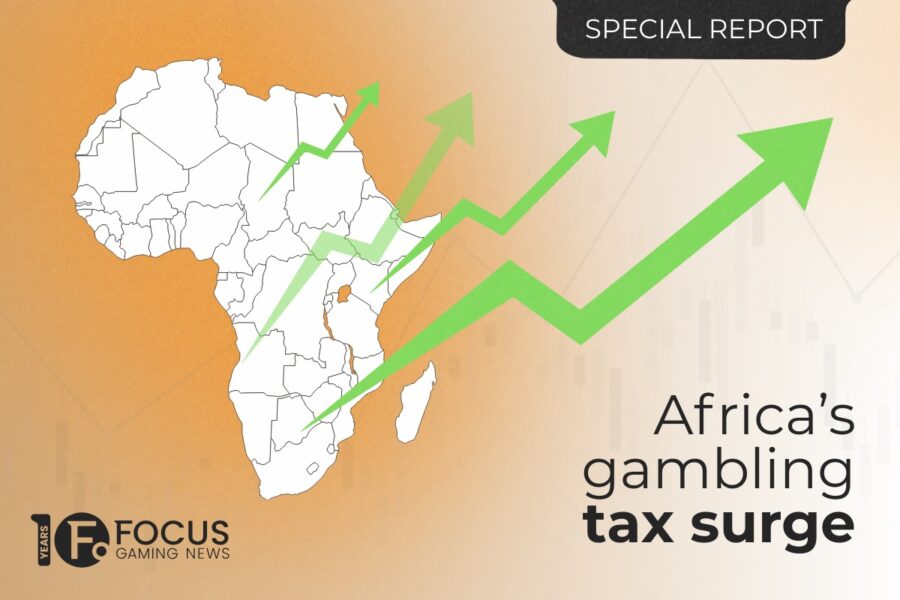
Focus Gaming News analyses the rapid acceleration of gambling taxation in Africa, where 12 countries have implemented or proposed major reforms since 2025.
Special report.- Governments across Africa are rapidly raising gambling taxes, sparking player backlash and fuelling concerns over informal betting growth. From 2025, moving just weeks into 2026, 12 countries have implemented or proposed major gambling tax reforms, targeting operators and players as governments move to capture revenue from rapidly growing betting markets. The speed and scale of these changes represent the fastest acceleration in gaming taxation across the continent.
In response to this rapidly evolving situation, Focus Gaming News has compiled this special report, documenting the reforms across key markets, analysing their impact on operators and players, and examining the tensions between fiscal revenue goals and market sustainability, reshaping Africa’s regulatory landscape.
From withholding taxes to excise duties and GGR levies, gambling rules are being rewritten across land-based, online and cross-border markets. Operators now face higher costs, stricter reporting and broader tax bases, while players encounter deductions on deposits, withdrawals and winnings. Revenue growth comes alongside rising controversy, with markets bracing for disruption as old practices give way to new fiscal realities.
Countries hit by gambling tax spike
Nigeria introduced new gambling tax rules on January 1, 2025, including a 5 per cent withholding tax on gambling winnings for residents and 15 per cent for non‑residents applied to sports betting, lotteries and other gaming prizes. Additionally, a 5 per cent excise duty on telecom and gaming services affects operators’ revenues for digital transactions. These measures aimed to capture revenue from the rapidly expanding online betting market while formalising digital gambling taxation.
Congo‑Brazzaville enacted a comprehensive gambling regulatory and taxation framework with Law No. 37‑2024, published on December 12, 2024, and coming into effect on January 1, 2025. The law sets rules for licensing and taxation of sports betting, casinos, lotteries and other gambling activities, with taxes applied on gross gaming revenue, generally ranging from 10 per cent to 15 per cent, as defined by the annual finance law. It also introduced certified reporting and compliance requirements for operators, marking a major step in formalising and regulating the sector.
Morocco implemented its new tax on foreign online gambling winnings under the 2025 Finance Law (Finance Bill PLF 60.24), adopted by Parliament in late 2024 and effective May 1, 2025. A 30 per cent withholding tax now applies to winnings earned by Moroccan residents on foreign online gambling platforms, deducted at source by banks and payment intermediaries. In addition, a 2 per cent solidarity contribution on such winnings supports social programmes, including aid for low‑income families, educational initiatives and rural development.
Kenya significantly restructured gambling taxes under the Finance Act 2025, effective July 1, 2025. The excise duty was cut from 15 per cent on bets placed to 5 per cent on deposits into betting wallets, while the withholding tax on winnings dropped from 20 per cent to 5 per cent and now applies to all withdrawals. Although the rates are lower, taxing every deposit and withdrawal-even funds not used for betting-broadens the tax base, meaning players may still pay more in some cases and overall government revenue from gambling is expected to rise.
Ethiopia implemented gambling tax reforms on July 1, 2025 under Proclamation No. 1395/2025. Withholding taxes on lotteries, prize draws, sports betting and other games of chance rose from 15 per cent to between 20 per cent and 25 per cent, while licensed operators continue to pay a turnover tax of about 15 per cent on total stakes or sales. Authorities also took steps to strengthen compliance, including suspending certain licences to reinforce regulation.
Malawi raised the withholding tax on gambling and lottery winnings from 10 per cent to 15 per cent and removed previous tax-free thresholds, effective December 31, 2025, meaning all winnings are now taxable at source. The tax applies to all sports betting, lotteries, casino games and online gambling, with operators required to deduct it before pay-out. These changes were implemented as part of broader revenue-raising measures in the 2025/26 Mid-Year Budget, aiming to capture more government revenue from the growing gambling sector while simplifying tax administration.
Senegal introduced a 20 per cent withholding tax on all regulated gambling winnings, effective November 1, 2025 under Law No. 17/2025. The tax applies across land‑based and online gambling, including sports betting, lotteries and casinos, and is withheld automatically by operators. The reforms aim to increase government revenue and formalise the sector, with mandatory reporting for licensed operators.
Zambia implemented a 10 per cent excise duty on betting stakes, effective October 15, 2025, levied on both online and retail wagers. The tax is collected monthly by operators and forms part of broader fiscal reforms aimed at increasing government revenue from the growing betting industry. It applies to all types of betting, including sports, lotteries and casino games, and is calculated on the total amount staked. The government expects the levy to strengthen regulation of the sector and support efforts to formalise digital gambling transactions.
The Gambia increased its tax on gambling winnings from 40 per cent to 50 per cent, effective January 1, 2026, under the 2026 Finance Act. The tax applies across all licensed betting, gaming, lotteries and casinos, including online platforms, and is withheld by operators at payout. It is expected to significantly increase government revenue, and operators must remit the tax promptly, strengthening compliance and oversight of the sector. At 50 per cent, it is the highest gambling winnings tax in Africa.
Zimbabwe raised the operator tax on gross gaming revenue (GGR) from 3 per cent to 20 per cent and increased withholding tax on player winnings from 10 per cent to 25 per cent across sports betting, lotteries and casino gaming. The operator gambling tax overhaul, effective January 1, 2026, is now treated as a final tax, reducing corporate tax overlap while enhancing revenue certainty.
Togolese Republic implemented a 5 per cent withholding tax on lottery and gambling winnings exceeding CFA500,000 (€760), effective January 1, 2026. Operators must withhold the tax at pay-out for both retail and digital bets, and certified electronic invoicing is now required to ensure full compliance and reporting under the 2026 Finance Law.
SA’s proposed betting tax
South Africa released a draft discussion paper on November 25, 2025, proposing a 20 per cent national tax on gross online gambling revenue (GGR). Previously, online and interactive gambling was taxed only through provincial levies of 6 per cent to 9 per cent, with no unified national rate.
The proposed tax would sit on top of existing provincial taxes and VAT, significantly increasing the overall burden on operators. Treasury presents the measure as both a revenue and social policy tool, targeting responsible gambling and stronger oversight of the rapidly growing online betting sector. The proposal has not been enacted into law as it is under consultation, with a deadline of February 27.
Backlash and market reaction
The continent-wide surge in gambling taxes has triggered widespread pushback from players, operators and industry groups. In Senegal, bettors staged public protests over reduced net payouts, claiming the new 20 per cent withholding tax slashed winnings and could encourage informal betting. Zambia saw operators challenge the excise duty in court, arguing the 10 per cent levy harms retail business and may drive customers offshore.
Malawi faced complaints about the removal of tax-free thresholds and the jump from 10 per cent to 15 per cent, which some say could push punters toward informal markets. Zimbabwe’s steep increases prompted calls for phased implementation to prevent destabilising small operators. In Kenya, criticism focused on taxing deposits and withdrawals, with some players feeling unfairly penalised on non-winning withdrawals.
Morocco’s 30 per cent withholding tax and 2 per cent solidarity contribution drew concern from cross-border players, while South Africa’s proposed 20 per cent GGR tax has sparked industry warnings that it may push bettors to offshore sites. Across the board, backlash highlights tension between revenue generation and market sustainability, with many arguing that sudden hikes could unintentionally fuel illegal or informal gambling channels.