


Lottery staff in Pretoria protest low pay and poor conditions

Wage talks between workers and the NLC have been ongoing since last year, with little progress made so far.
South Africa.- More than 100 lottery employees in Pretoria are protesting over low wages and poor working conditions.
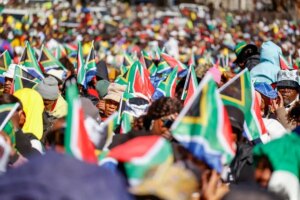
On Wednesday, May 8, 2025, around 100 NLC employees staged a march to the Department of Trade, Industry and Competition, voicing concerns over pay, conditions, employee welfare and the modernisation of the commission.
Clad in Public Servants Association black T-shirts, the demonstrators sang protest songs and waved placards highlighting their concerns. Members from the National Union of Public Service and Allied Workers (NUPSAW) also participated.
The demonstrators demanded the dismissal of the NLC board, an end to selective accountability and substantial wage increases. They also claimed that vulnerable communities weren’t benefiting fairly from lottery revenue.
Wage talks between the workers and the NLC have been ongoing since last year, with little progress made so far. Represented by the PSA, workers are seeking an 8.5 per cent wage increase, but the NLC is holding firm at 6.5 per cent.
The stalemate in talks led to weeks of picketing by the staff before they took to the streets in protest. The PSA alleged that management imposed a cost-of-living adjustment without consensus while wage discussions were still pending.
Mashudu Muhanelwa, PSA chairperson at the NLC, urged Minister Parks Tau to step in and address the workers’ concerns with the NLC.
He said: “The main thing we are concerned about is the sustainability of this organisation. We are not in any way defending or fighting against any management regime. We want what’s best for the workers of this organisation.”
Muhanelwa also criticised the absence of worker performance bonuses, the hiring of consultants, the lack of transparency and the commission’s falling governance standards.
NLC’s Response
In a statement, Jodi Schultz, NLC commissioner, explained that the NLC implemented a 7 per cent across-the-board pay rise for 2024/25 to prevent a lengthy dispute.
Schultz said: “This comprised a 4.4% pensionable increase and a non-pensionable allowance equivalent to 2.6% of salary, payable until March 2025.”
Schultz believes the demonstration, which focuses on 2024/25 concerns, does not support productive negotiations.
According to Rudzani Tshigemane, NLC’s spokesperson, the PSA’s worries about governance and funding for vulnerable communities stemmed from tax and legal compliance issues.
Tshigemane said: “While we understand the challenges faced by community-based organisations, compliance is not optional; it is a legal and ethical obligation that affects South Africa’s international standing. Management has a legal duty to comply with legislation.
“Our ongoing modernisation initiative is designed to enhance transparency and reduce corruption. These are goals we hope all stakeholders, including the PSA, will support and not frustrate. We have also engaged in actions towards lifestyle audits, something the PSA has not consistently supported.”
Tshigemane acknowledged that change can be unsettling but that the commissioner has repeatedly assured staff that the reforms will not lead to job losses.