



1xBet releases International Player Safety Index

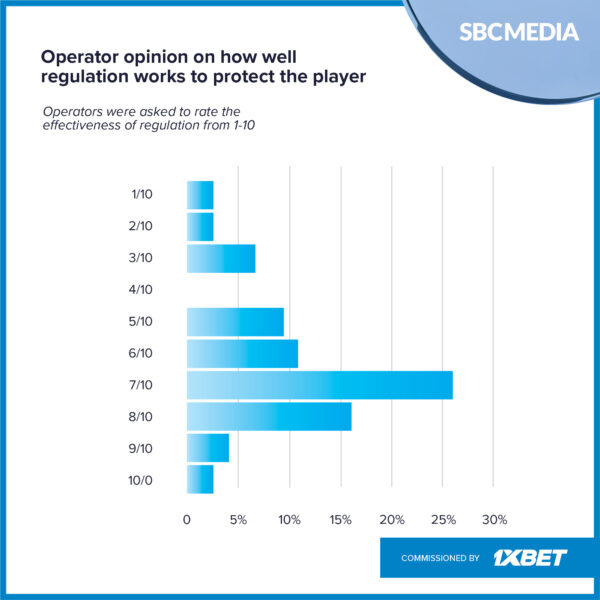
Operators across Western Europe have given gambling regulations a score of 7 out of 10 for player protection effectiveness, according to a new International Player Safety Index commissioned by 1xBet.
Special report.- The International Player Safety Index, commissioned by 1xBet and produced by SBC Media, has found that 60 per cent of operators in Western Europe rated regulation at 7/10 or higher for protecting players.
The survey, conducted between August and September 2025 across nine regulated markets (the UK, Ireland, Germany, Italy, Spain, Portugal, Denmark, Sweden and the Netherlands), highlights inconsistencies in how player protection standards are applied. 70 per cent of operators say they vary their approach meaningfully between jurisdictions, while only 30 per cent attempt to maintain consistent practices across borders.
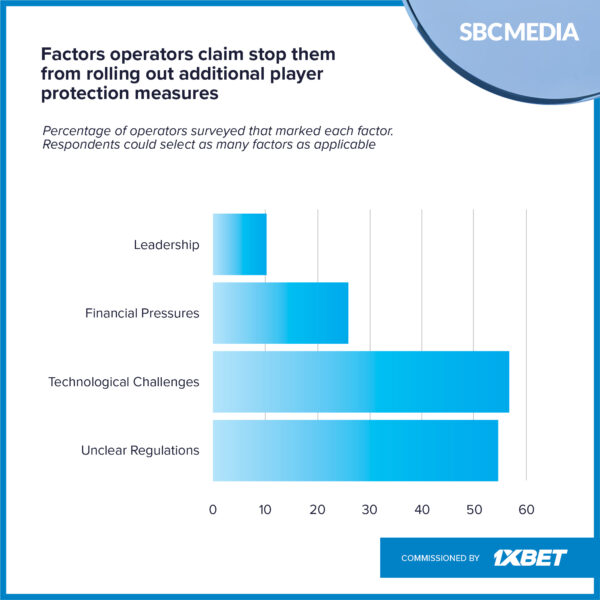
In-depth conversations also revealed a litany of specific concerns that gambling companies say are limiting the effectiveness of player protection. The findings also suggest that it is extremely difficult, if not impossible, to apply best practice standards of player protection across the region, in the face of local idiosyncrasies and unclear regulation.
The report says: “Where regulations do receive a clean bill of health from operators, their insights suggest that there is still some road to travel to better understand how to measure and track gambling harm.”
Regulatory consistency
The divergence in regulatory frameworks has created what operators describe as an impossible situation in some markets. Portugal, for example, is cited as a particularly problematic jurisdiction, where operators claim regulations actively prevent them from protecting players by requiring extensive evidence before account restrictions can be imposed.
One operator working primarily in Portugal explained: “We’re not able to restrict accounts when we notice problem behaviour. The regulator is very concerned about this. We need to be absolutely sure. We can notice a pattern, but we can’t suspend at the first signal of problem behaviour.”
This stands in contrast to markets like the UK, where operators are encouraged to take proactive steps at the first sign of problem gambling risks. Meanwhile, the Spanish regulator, the DGOJ, has announced its intention to roll out a player protection algorithm that will become mandatory for licensees to use. The technology is designed to provide the market with a standardised set of tests to detect when players may be gambling irresponsibly. The project is due to be rolled out in 2026.
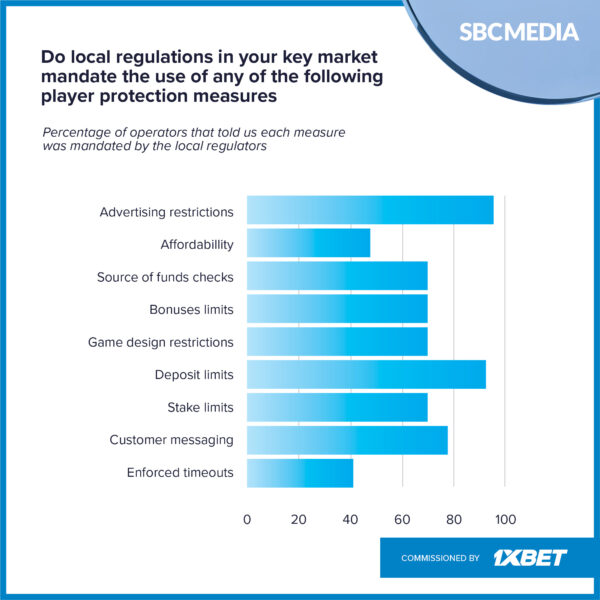
The survey also indicates that ad restrictions are mandated by 95 per cent of regulators surveyed, making them the most common player protection measure required by authorities. Deposit limits follow closely, with around 90 per cent of regulators mandating their use, whilst enforced timeouts are the least commonly mandated measure at approximately 40 per cent.
Communication between regulators and operators
According to the report, multiple operators called for stronger lines of communication between regulators and the companies they oversee. Several expressed concern that asking regulators for clarification on specific compliance points could trigger immediate investigations rather than collaborative dialogue.
“Regulators could support operators by … encouraging the use of innovative technologies and fostering open collaboration between regulators and operators. This would reduce ambiguity, ensure best practices are aligned and ultimately enhance the quality of player protection,” said one. “They should make it easier to ask situational questions,” said another operator with a focus in the UK.
AI: the future of player protection?
Operators overwhelmingly identified artificial intelligence (AI) as the technology that will underpin future player protection measures. The industry anticipates AI-powered systems will enable real-time monitoring with human-sounding chatbots integrated within risk detection platforms.
“There’s no reason why if you can identify a player that might be a risk of harm and they’re still online that your technology solution can’t open up a chat window, interrupt their gaming system, have a chatbot style conversation with them and then initiate an action off the back of that,” said one operator.
The shift towards personalised interventions represents a move away from simple limit-based triggers towards systems that assess each individual customer and set thresholds appropriate to their specific needs. One operator confirmed: “We are actually developing most of these tools ourselves in-house and that’s what we’re aiming for – a much more individual approach to how to protect the customer.”
The obvious question to pose against the backdrop of this optimism is whether regulations will permit these kinds of systems to be deployed. And whether forward-thinking authorities that encourage the use of AI to aid player protection will unwittingly create an even more fragmented framework in Western Europe where their peers are slow to catch up.