



James Hancock, Soft2Bet: “Deals are won on trust, and nothing builds trust faster than honesty”
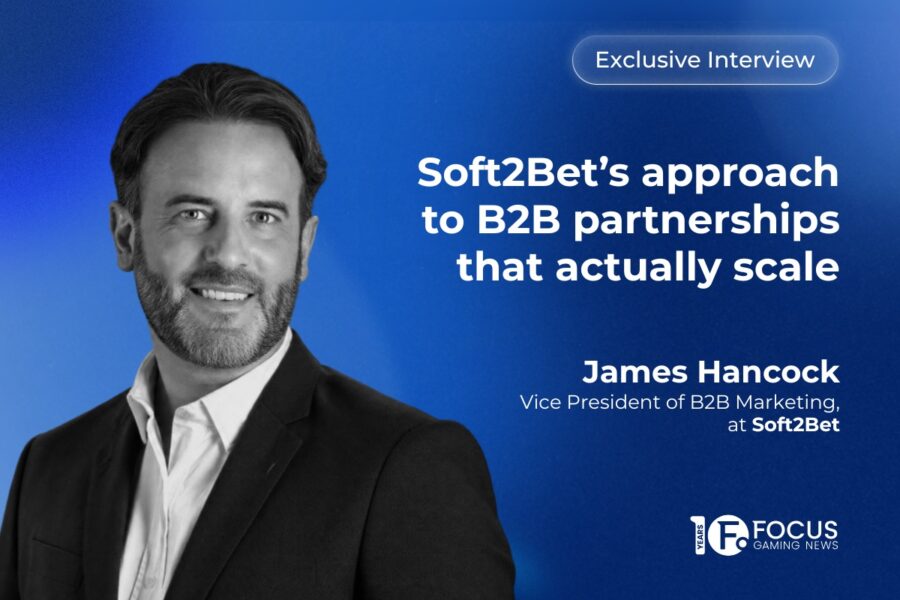

Soft2Bet’s new B2B marketing vice president says operators need suppliers who understand adoption costs, operational realities and post-launch performance.
Key takeaways:
- James Hancock has joined Soft2Bet as Vice President of B2B Marketing, bringing more than 10 years’ experience across igaming, sports betting and payments.
- He says B2B partnerships should be judged on what happens after contract signing, when the platform is live and handling real-world traffic.
- Hancock argues that comparable successful launches are more persuasive than claims of flexibility, scalability or growth.
- Soft2Bet’s MEGA engine lets operators add advanced gamification through a standalone API without replacing their core platform.
- Hancock wants suppliers to account for hidden adoption costs, including integration, CRM alignment, staff training and day-to-day management.
Exclusive interview.- In an exclusive interview with Focus Gaming News, Soft2Bet vice president of B2B marketing James Hancock explains why the industry’s most durable supplier relationships are built after the contract is signed. Drawing on more than a decade across igaming, sports betting and payments, he argues that operators should judge technology partners on comparable launches, transparent delivery and the operational cost of adoption. For Hancock, the real test begins once a platform is live—when integration, support and performance data determine whether the partnership delivers measurable commercial value.
You bring more than 10 years of experience across iGaming, sports betting and payments. How has that shaped the way you approach B2B partnerships today, and what perspective do you hope to bring to Soft2Bet?
Spending a decade on the front lines of B2C and B2B fundamentally rewires how you view a B2B relationship because it gives you a complete, 360-degree view of how our things fit together. It teaches you very quickly to look past the initial excitement of the contract signing and focus intensely on what happens months down the line when the platform is live and facing real-world traffic. Having driven brand positioning and revenue scalability from the inside of major operations, I’ve had some really valuable schooling in what an operator goes through and where they hit friction points.
What I hope to bring to Soft2Bet is a focus on straightforward, practical value, as senior decision-makers want a clear path to scale, not a standardised sales deck. By aligning closely with Andrew Cochrane and our commercial team, my goal is to ensure our messaging around our platform agility and gamification architecture is completely transparent. We are here to offer genuine utility that fits an operator’s exact regulatory and operational needs.
“My goal is to ensure our messaging around our platform agility and gamification architecture is completely transparent.”
James Hancock, vice president of B2B marketing at Soft2Bet.
What attracted you to Soft2Bet at this stage of its B2B journey, and what are your main priorities?
What immediately made Soft2Bet the most compelling proposition in the market for me is the fact that we are a tech provider built by operators, for operators, meaning we completely own and control our entire underlying tech stack instead of relying on third-party licenses.
Because we have run our own successful B2C portfolio in the past, we’ve essentially tested, refined and broken down our own software in real time before we ever deploy it into a partner’s live environment. A perfect example of this technical independence is our MEGA engine, which allows operators to seamlessly inject highly advanced gamification layers into their user experience via a standalone API, completely bypassing the massive commercial risk and operational nightmare of overhauling their core platform.
Moving forward, a key component of my role is, alongside the business development team, to pinpoint our strongest commercial opportunities and cultivate the right strategic relationships. Ultimately, the deeper our understanding of an operator’s technical infrastructure, commercial objectives, and internal capabilities, the better equipped we are to deliver a highly tailored proposal that drives real business value and guarantees flawless execution.
In a market where almost every supplier promises flexibility, scalability and growth, what actually wins a B2B deal today?
You have to replace promises with proof. Highlighting comparable, successful launches is essential because it moves the conversation from theory to reality, demonstrating exactly how the technology has driven tangible retention, engagement and speed to market for similar operators.
Deals are won on trust, and nothing builds trust faster than honesty. Sales teams naturally feel the pressure to say ‘yes’ to every feature request, offering a confident and clear ‘not yet’ is infinitely better than agreeing to something that becomes a bottleneck post-launch. Being ruthlessly specific about what can and cannot be delivered right now is the best way to prevent unwanted surprises and build a long-term, profitable partnership.
Having worked across different sides of the industry, where do you think suppliers still misunderstand what operators really need from a technology partner?
The biggest misunderstanding is that suppliers often underestimate the hidden costs of adoption. A new feature or gamification tool might look incredibly simple and intuitive during a sales demo, but suppliers forget that technology doesn’t run itself. Integrating a new product touches multiple departments, as an operator has to allocate resources to configure it, align it with their CRM, train their staff, and manage it daily. That workload is significant.
To be a true partner, suppliers need to shift away from just pitching features and start discussing the operational realities. The sales conversation should address questions like: Who is going to manage this daily? Do you have the bandwidth? The level of managed support required will vary wildly from a Tier 1 operator to a smaller brand. A supplier needs to fully understand the operator’s existing team and infrastructure before deciding exactly how the partnership should be structured to ensure the technology actually delivers ROI.
Operators increasingly expect their suppliers to contribute directly to commercial performance rather than simply provide technology. How do you see that changing the B2B relationship?
Making suppliers more accountable for commercial performance changes what happens once a deal is signed. If the business case is built around retention, engagement or revenue, the relationship has to continue after integration. The supplier should stay involved, review performance with the operator and make changes when the data shows they are needed.
It also means agreeing early on how success will be measured. I would want a clear baseline, relevant player groups and a full picture of costs before drawing conclusions. Acquisition quality, marketing activity and operational decisions can all affect the result. Each review should leave the operator and supplier clear on what is driving the numbers and what needs to change.
“If the business case is built around retention, engagement or revenue, the relationship has to continue after integration.”
James Hancock, vice president of B2B marketing at Soft2Bet.
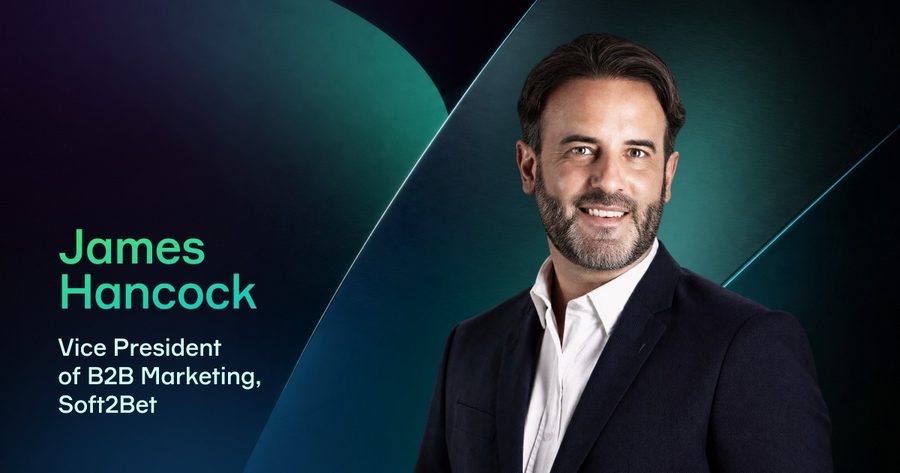
If we speak again a year from now, what would you like to have achieved for Soft2Bet’s B2B business and in the partnerships you’ve helped build?
Success a year from now looks like repeat business. When a partner returns to expand into a new market or integrate another Soft2Bet product, it proves we delivered on our initial promise. I want to see a significant increase in operators not just going live with us, but actively scaling with us.
Personally, my goal is to be recognised by our partners as someone who is entirely straightforward, reliable, and proactive. While B2B sales is often measured by the contracts that get signed, I believe it should be measured by what grows. If our partnerships are stronger and more profitable a year after the first launch, that tells me we are doing business the right way.
By Focus Gaming News Editorial Team