



Heathcliff Farrugia: “SiGMA’s role is to act as a bridge between industry, regulators and governments across multiple jurisdictions”
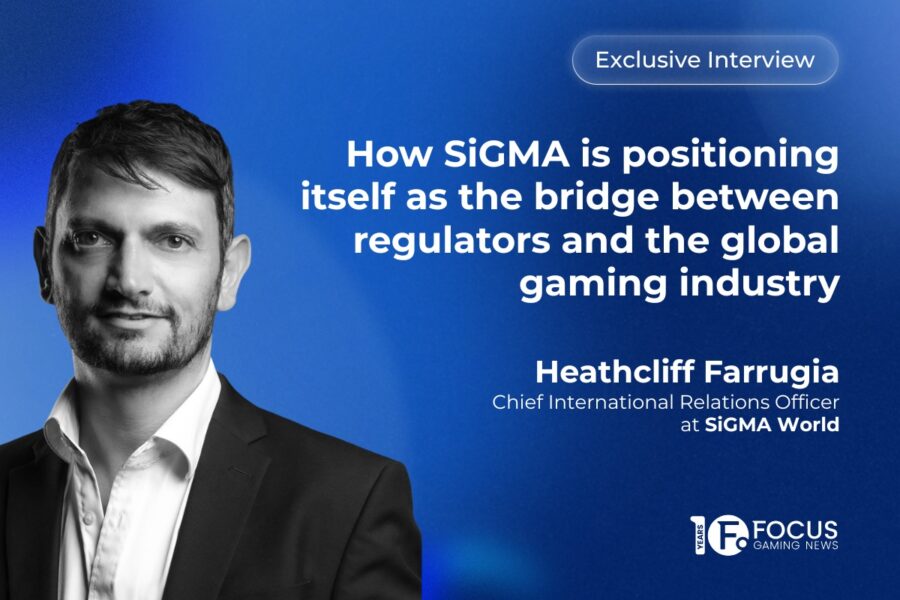
Heathcliff Farrugia, Chief International Relations Officer at SiGMA World, discusses SiGMA’s Rome edition, regulatory balance, Africa and Latin America, and the risks of weakening licensed markets.
Key takeaways:
- Heathcliff Farrugia says SiGMA World Rome will bring together operators, affiliates, suppliers, investors, regulators and policymakers to create business opportunities and discuss regulation, innovation and responsible gaming.
- SiGMA’s new motto, “Advancing Regulated Gaming”, reflects its aim to strengthen engagement between the industry, regulators, governments and policymakers.
- Farrugia says regulation must strike the right balance, warning that overly restrictive rules can disadvantage licensed operators and push consumers towards unregulated channels.
- He identifies Africa as a particularly promising growth region, citing digital connectivity, a young and tech-savvy population, expanding mobile payments and growing regulatory recognition.
- On Brazil, Farrugia says measures that reduce the attractiveness or viability of the regulated market risk strengthening the illegal market and making consumer protection more difficult.
Exclusive interview.- SiGMA World will bring together operators, affiliates, suppliers, investors, regulators and policymakers as the industry places greater emphasis on regulated growth. In an exclusive interview with Focus Gaming News, SiGMA World chief international relations officer Heathcliff Farrugia says effective regulation must balance consumer protection, innovation and market viability. He also discusses Africa and Latin America as key regions to watch, and warns that measures weakening licensed markets could strengthen illegal operators.
SiGMA World Rome is approaching. What can attendees expect from this edition, and why was Rome the right choice?
Rome is one of the world’s great international capitals, a city that combines history, culture, business and diplomacy. It provides the ideal backdrop for conversations about the future of regulated gaming.
Attendees can expectt a strong mix of operators, affiliates, suppliers, investors, regulators and policymakers. Our focus is on creating meaningful business opportunities while facilitating discussions around regulation, innovation, technology and responsible gaming. We are also placing greater emphasis on bringing regulators and industry stakeholders together in a constructive environment where dialogue leads to practical outcomes.
Your new motto is “Advancing Regulated Gaming.” What does it mean for SiGMA, and what changes in how you operate?
“Advancing Regulated Gaming” reflects the direction the industry is taking and the role SiGMA wants to play within it. Effective regulation is not a side discussion, but a central topic towards having a sustainable industry.
For SiGMA, it means strengthening engagement with regulators, government authorities and policymakers worldwide. We are investing more effort into creating platforms where the public and private sectors can exchange ideas, share experiences and collaborate. Our objective is to support environments where innovation thrives alongside effective regulation, consumer protection and market integrity.
“We are investing more effort into creating platforms where the public and private sectors can exchange ideas, share experiences and collaborate.”
Heathcliff Farrugia, chief international relations officer at SiGMA World.
How do you see the global gaming landscape evolving over the next few years, especially in terms of regulation?
We are seeing a clear global trend towards increased regulation and market formalisation. More jurisdictions are recognising that well-designed regulatory frameworks create safer environments for consumers while generating economic benefits through taxation, investment and job creation.
That said, regulation must strike the right balance. We have seen examples where excessive or overly restrictive regulation has unintentionally disadvantaged licensed operators; those businesses that are committed to operating legally, responsibly and in full compliance with the law.
When this balance is lost, the risk is that consumers migrate towards unlicensed and unregulated operators. In such circumstances, the illegal market can thrive, undermining consumer protection objectives, reducing regulatory oversight and ultimately weakening the very goals regulation was intended to achieve.
Which markets or regions do you see as the most promising for well-regulated growth?
I am particularly interested in the developments taking place in Africa. The continent represents one of the most exciting growth opportunities for the global gaming industry, with increasing digital connectivity, a young and tech-savvy population, expanding mobile payment solutions, and a growing recognition among policymakers of the benefits that effective regulation can bring.
Across several African jurisdictions, we are seeing a clear trend towards the introduction and strengthening of regulatory frameworks designed to enhance consumer protection, increase transparency, and create sustainable market conditions for operators. While the pace of development varies from country to country, the overall direction of travel is encouraging and reflects the growing maturity of the sector.
Latin America also continues to present significant opportunities, as regulatory frameworks become more established and markets mature, albeit some recent regulatory decisions have sent conflicting messages in the region.
Regulation often struggles to keep pace with the industry. How can operators, regulators and events like SiGMA collaborate better?
The key is continuous dialogue. Regulation is most effective when policymakers understand operational realities and industry stakeholders understand public policy objectives.
Events like SiGMA provide a neutral platform where those conversations can happen. Collaboration leads to more balanced frameworks, which ultimately benefit consumers, governments and businesses alike.
What is SiGMA’s perspective on the recent decision in Brazil, and what lessons can other markets take from it?
Brazil remains one of the most important gaming jurisdictions in the world, and its regulatory developments continue to attract global attention. Experience shows that well-designed regulation can create a safer, more transparent environment for consumers while delivering economic benefits and regulatory oversight.
The industry welcomed Brazil’s regulatory framework and responded with significant investment and commitment to compliance. As a result, market activity increasingly moved from the illegal sector into the regulated ecosystem, providing authorities with greater visibility, stronger control mechanisms, and enhanced player protection safeguards.
For this reason, any measures that diminish the attractiveness or viability of the regulated market risk producing unintended consequences. Rather than curbing gaming activity, they may strengthen the illegal market, making it more difficult to protect consumers, ensure compliance, and achieve the intended public policy objectives.
When a major market restricts or bans gambling activity, what are the risks for players, operators and the regulated industry as a whole?
History has shown that demand rarely disappears. When regulated options become unavailable or less competitive, players often migrate to unregulated channels where consumer protections, responsible gaming measures, and regulatory oversight are limited or entirely absent.
For governments, this can result in reduced transparency, lower tax revenues, and diminished enforcement capabilities. For licensed operators, it creates uncertainty, discourages investment, and undermines confidence in the regulatory framework. It also creates an inherently unfair and unbalanced competitive environment, where operators that comply with licensing requirements, player protection obligations, and taxation rules are placed at a disadvantage compared to illegal operators that face none of these burdens.
“When regulated options become unavailable or less competitive, players often migrate to unregulated channels where consumer protections, responsible gaming measures, and regulatory oversight are limited or entirely absent.”
Heathcliff Farrugia, chief international relations officer at SiGMA World.
Looking ahead, what is SiGMA’s role in shaping international dialogue between regulators and industry, and what are your priorities as Chief International Relations Officer?
SiGMA’s role is to act as a bridge between industry, regulators and governments across multiple jurisdictions. As the industry becomes increasingly global, facilitating constructive international dialogue becomes more important than ever.
My priorities are to deepen relationships with regulatory authorities, expand government engagement across our global events portfolio, promote the exchange of best practices and ensure that SiGMA continues to be recognised as a trusted platform for meaningful discussion. Ultimately, our goal is to help create a gaming ecosystem that is innovative, responsible and sustainable for the long term.
By Focus Gaming News Editorial Team