


“The gambling industry can’t afford to talk only to itself”, Andrew Pink, Play’n GO
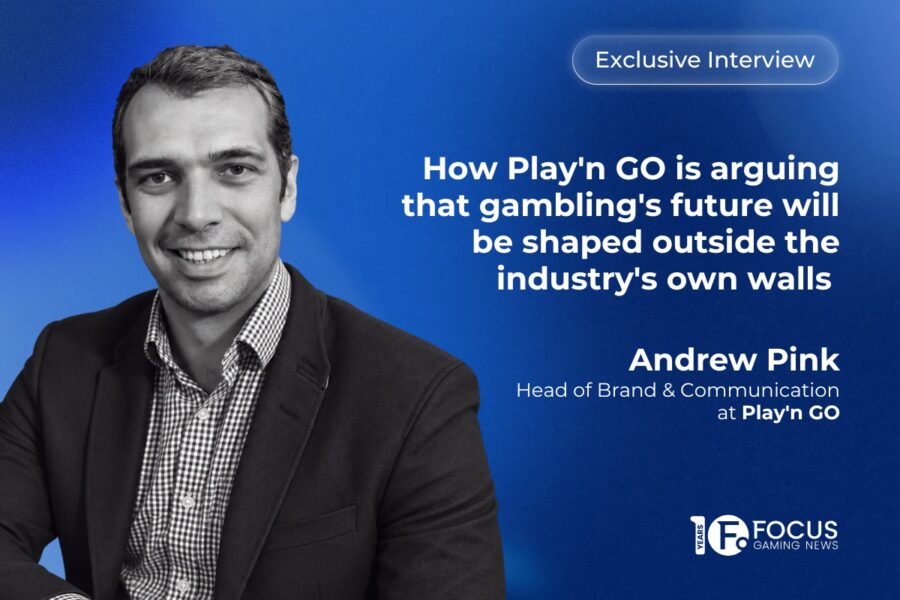
Following Play’n GO’s participation in brain health discussions during United Nations General Assembly week in New York, Head of Brand & Communication Andrew Pink explains why the future of gambling will be shaped not only by regulators and operators, but by wider conversations around trust, wellbeing and sustainable entertainment.
Key takeaways
- Play’n GO participated in brain health discussions during UN General Assembly week in New York alongside the European Brain Council, the World Health Organization and policymakers from outside the gambling industry.
- Andrew Pink argues the industry’s biggest risk is isolation: “If we only ever speak with people who already agree with us, we miss opportunities to learn, adapt and improve.”
- One week earlier, Play’n GO hosted a closed-door industry leadership forum in France focused on trust, transparency and gambling’s future licence to operate. Pink says both events were addressing the same underlying questions.
- CEO Magnus Olsson’s vision of sustainable entertainment goes beyond compliance: it means building an industry that earns legitimacy by creating value responsibly and operating transparently.
- Pink acknowledges not everyone in the New York room supported the gambling industry’s presence, but says “there was a, sometimes grudging, acceptance that the gambling industry isn’t going away.”
Exclusive interview.- Play’n GO joined the European Brain Council and stakeholders connected to the United Nations General Assembly in New York this week for discussions that had nothing to do with gambling, and that was precisely the point.
Andrew Pink, Head of Brand & Communication, says the company’s presence at a brain health forum alongside researchers, public health experts and policymakers reflects a deliberate strategy: if gambling wants to be treated as legitimate entertainment, it cannot afford to only speak to people who already understand it. The conversations in New York and a closed-door industry forum in France the week before point to the same conclusion; the future of gambling regulation will be shaped well beyond the industry’s own walls.
Play’n GO was in New York this week participating in discussions around brain health alongside the European Brain Council and stakeholders connected to the United Nations General Assembly, such as the World Health Organization. Why was it important for Play’n GO to be part of that conversation?
For us, it comes down to a very simple belief: if gambling wants to be recognised as a legitimate form of entertainment, it needs to be willing to engage in wider societal conversations.
The discussion in New York wasn’t a gambling industry event. It was a brain health event. The room included researchers, policymakers, public health experts and representatives from many different sectors, which is precisely why it mattered.
Too often, gambling talks to itself. We attend gambling conferences, speak to gambling media, and debate issues with people who already understand the industry. Those conversations are important, but they aren’t enough.
What made New York valuable was the opportunity to listen and contribute in a broader forum focused on how people interact with digital products, entertainment experiences and emerging technologies. These are issues that extend far beyond gambling.
Play’n GO has long argued that great entertainment should be fun, safe and fair, and participating in discussions around brain health, consumer wellbeing and sustainable digital experiences is a natural extension of that philosophy.
The industry benefits when we engage constructively with experts from outside our own ecosystem and when we help ensure policy discussions are informed by evidence rather than assumptions.
Some people might wonder what a casino entertainment company is doing at an event focused on brain health. What’s your response to that?
I’d actually turn the question around and ask why we wouldn’t be there.
The reality is that gambling increasingly exists within a much broader digital ecosystem. The boundaries between entertainment, gaming, technology and consumer experiences continue to blur. If serious conversations are taking place about digital wellbeing, brain health and sustainable consumer engagement, then our industry should be represented.
Not because we’re looking for approval, but because we have experience and insights that can contribute to those discussions.
What’s encouraging is that conversations like these have moved beyond simplistic narratives. Brain health is an enormously complex field. Researchers are looking at everything from social media to gaming, digital services, AI and entertainment experiences. The discussion is increasingly about understanding behaviour and creating environments that support positive outcomes.
That’s where Play’n GO can contribute.
We’ve spent twenty years building entertainment products for regulated markets, and we’ve consistently argued that sustainable growth comes from putting long-term player experiences ahead of short-term opportunism.
Those principles are becoming increasingly relevant in wider conversations about digital entertainment.
“Too often, gambling talks to itself. We attend gambling conferences, speak to gambling media, and debate issues with people who already understand the industry. Those conversations are important, but they aren’t enough.”
Andrew Pink, head of brand & communication at Play’n GO.
Just a week earlier, Play’n GO brought together industry leaders for a closed-door meeting in France for discussions around trust, transparency and the future of gambling. Was there a connection between the conversations in France and those in New York?
Absolutely. On the surface, they might look like very different events. One was an industry leadership forum in France and the other was a policy and brain health discussion in New York. But at their core, they were addressing many of the same questions.
In France, we spent a great deal of time discussing trust, transparency, sustainability and what the industry’s future licence to operate looks like. There was a strong consensus that gambling companies can’t simply rely on regulation alone. They need to actively demonstrate responsibility, credibility and a willingness to engage with broader societal expectations.
In New York, those same themes emerged from a different perspective. The discussion was centred more around public health, evidence and brain wellbeing, but the underlying question was very similar: how do industries build trust while continuing to innovate?
One of the things that struck me is that people outside the gambling industry are increasingly interested in engaging constructively with us.
It’s true, the gambling industry didn’t have full-throated vocal support from everyone in the room in New York this week, and I’m sure a portion of the attendees would prefer we didn’t exist, full stop. But there was a sometimes grudging acceptance that the gambling industry isn’t going away.
But meaningful engagement only happens if the industry shows up, participates in good faith and is prepared to have serious conversations about the future.
That’s something Play’n GO has consistently tried to do and will continue to do so.
You’ve referenced sustainability several times. Magnus Olsson recently spoke about the need for gambling to be viewed as sustainable entertainment. How does the work in New York support that vision?
I think New York actually reinforced one of Magnus’s most important points: the future of our industry won’t be determined solely by gambling companies. It will be shaped by society’s expectations of entertainment more broadly.
For years, gambling has often been discussed as a standalone sector, but that’s becoming increasingly difficult to justify. Today we operate in the same digital world as streaming platforms, social media, video games and countless other forms of entertainment.
The questions being asked of those industries around wellbeing, trust, transparency and long-term sustainability are increasingly being asked of us as well.
That’s why events like the European Brain Council discussion are so important. They place gambling within a much wider conversation about digital experiences, consumer behaviour and human wellbeing. If we genuinely believe that gambling is a form of entertainment, then we should be willing to participate in those discussions rather than standing apart from them.
Magnus’s broader point is that sustainable entertainment isn’t simply about compliance or meeting regulatory requirements. It’s about building an industry that earns legitimacy because it creates value responsibly, operates transparently and contributes positively to the communities in which it exists.
The companies that embrace that future will thrive. The companies that view sustainability as something separate from commercial success may find themselves increasingly out of step with where the world is heading.
What is the long-term significance of these kinds of engagements for both the gambling industry and Play’n GO?
The biggest risk for any industry is becoming isolated.
If we only ever speak with people who already agree with us, we miss opportunities to learn, adapt and improve. And we lose the chance to influence thinking, policy and ultimately legislation too.
What we’re seeing now, whether through the Better Gambling Forum, the European Brain Council discussions, or broader conversations connected to organisations such as the United Nations and World Health Organization, is the emergence of a more mature dialogue around gambling’s place within society.
For the industry, that’s important because future regulation, public confidence and long-term growth will increasingly be shaped by these conversations.
For Play’n GO, it aligns perfectly with who we are. We’ve spent years arguing that regulation is a competitive advantage, not an obstacle. We’ve argued that trust matters. We’ve argued that entertainment comes before short-term exploitation. We’ve argued that sustainable growth is ultimately more valuable than growth at any cost.
The reason we participate in these discussions is not that they’re immediately commercial. It’s because the future of the industry will be shaped by the companies willing to help build it.
And if we want gambling to be recognised as a respected, sustainable form of entertainment, we need to be present whenever those conversations take place.
By Focus Gaming News Editorial Team