Moving farewell to Paul Gauselmann at Benkhausen Castle
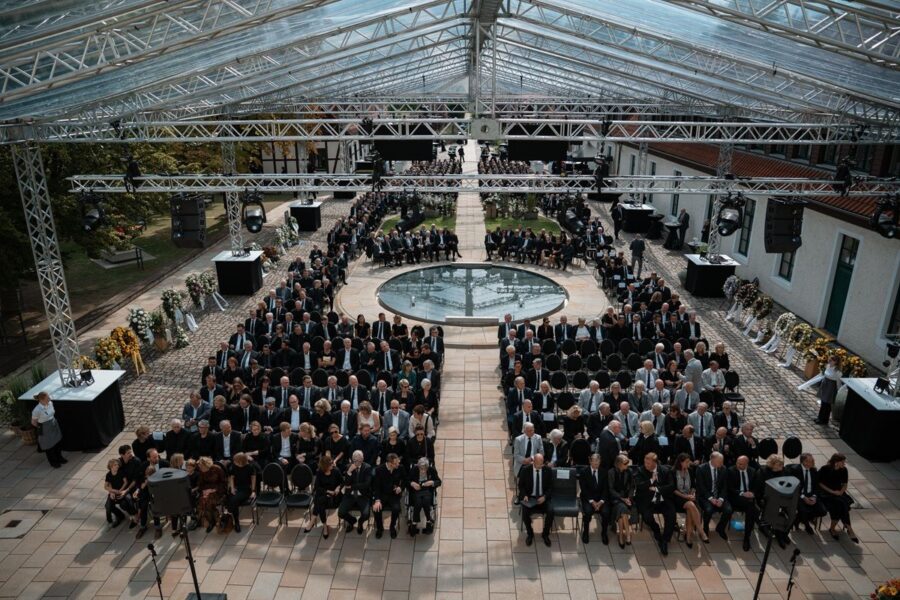
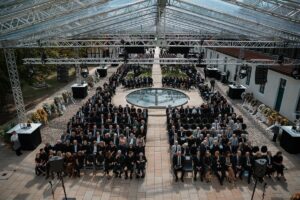
More than 600 guests gathered at Benkhausen Castle for a memorial service honouring Merkur Group founder Paul Gauselmann, who passed away on August 21.
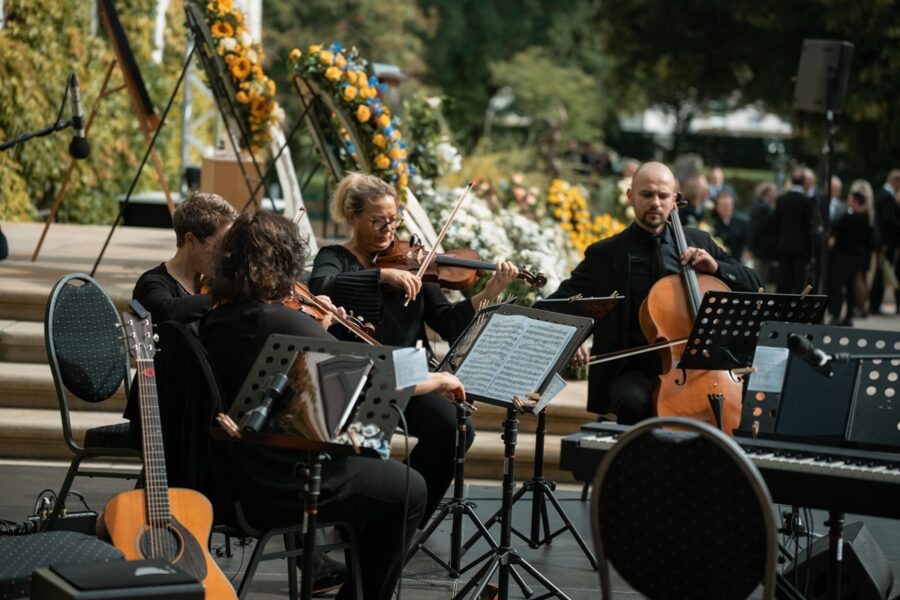
Press release.- More than 600 invited guests bid farewell to Paul Gauselmann at Benkhausen Castle. In addition to family members, friends and companions, numerous representatives from politics, business, the industry, as well as clubs and associations were present, as were employees of the Merkur Group. The decorated courtyard with flowers, wreaths, mourning flags, and portraits of Paul Gauselmann framed the memorial service. To allow the staff of the group to follow the ceremony, it was streamed live. Paul Gauselmann passed away on August 21—shortly before his 92nd birthday. He founded the Merkur Group as a one-man operation and, over 67 years at the helm, developed it into an internationally successful group with currently more than 15,000 employees. The speakers praised Paul Gauselmann’s entrepreneurial lifetime achievement, his social engagement, and his impact on many people. They recalled his support for hospitals, schools, kindergartens, fire brigades, and clubs in the region. At the same time, they described him as a person who listened, took others seriously, gave impulses, and shaped his environment. Thus, different facets became visible: the family man, the entrepreneur, the politically active figure, the regional supporter, the tennis partner, and the Doppelkopf player.
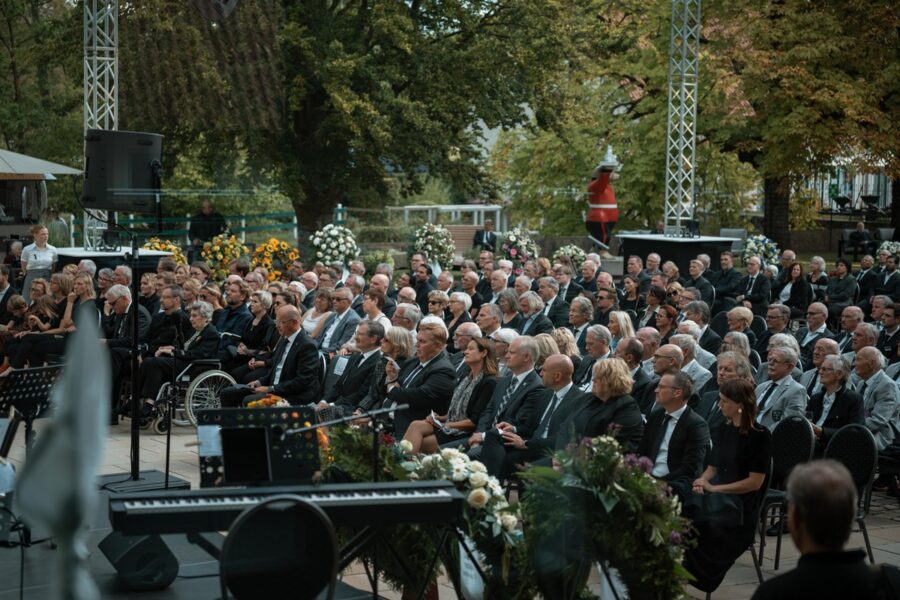
The opening was made by Michael Gauselmann. The chairman of the supervisory board of the Merkur Group gave personal insights into his relationship with his father. He described how Paul Gauselmann took on different roles depending on the situation—from family man to entrepreneur. One of his father’s lessons remained especially memorable: “Only an idea that is implemented is a good idea,” Michael Gauselmann reported. He had repeated this sentence in many conversations with employees years later. “Not talking, but doing,” Michael Gauselmann summed up the message his father gave to his son.
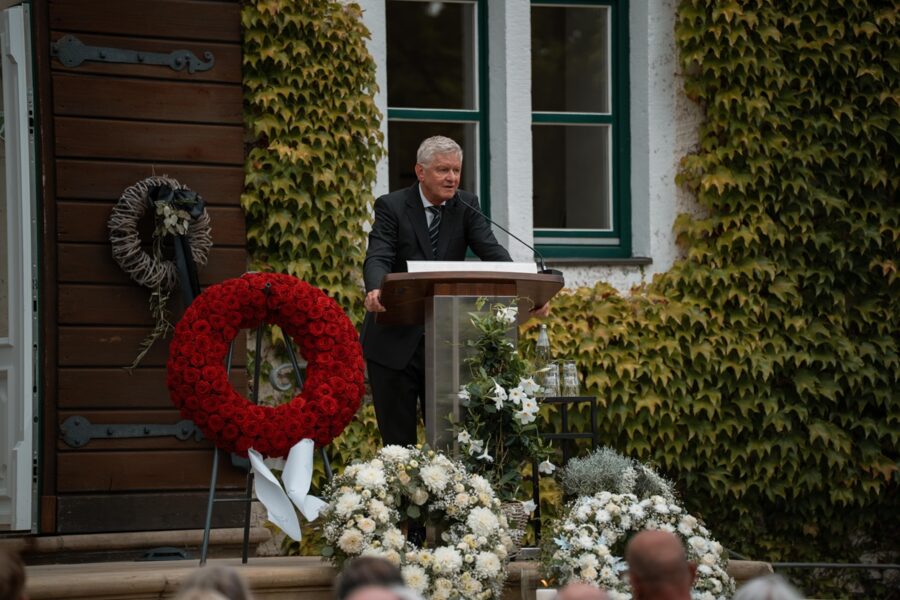
As one of Paul Gauselmann’s closest confidants, Manfred Stoffers, vice chairman of the management board of the Merkur Group, moderated the memorial service. He recounted how he met the deceased 42 years ago, guided the ceremony, and introduced the speakers with personal anecdotes.
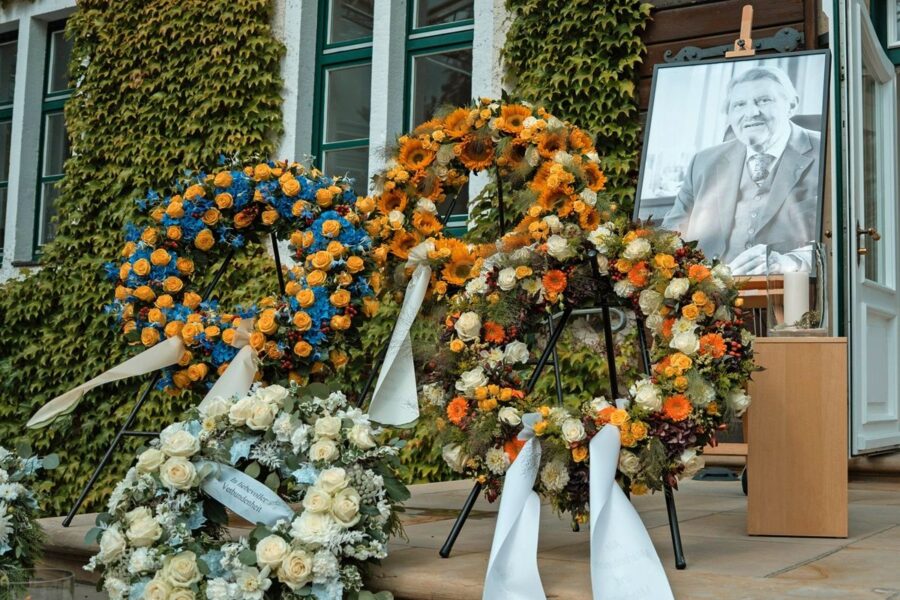
Lars Felderhoff placed Paul Gauselmann’s entrepreneurial achievement in context. The spokesperson for the Merkur Group stated that the company would not exist without his courage, dedication, and tenacity, and praised him as a “brilliant tinkerer, visionary, and designer.” He also highlighted his energy and restlessness: “Stagnation was not an option.” At the same time, Felderhoff emphasised that the success of “PG,” as he was respectfully called, could not only be read in numbers but “also in the people he shaped.”
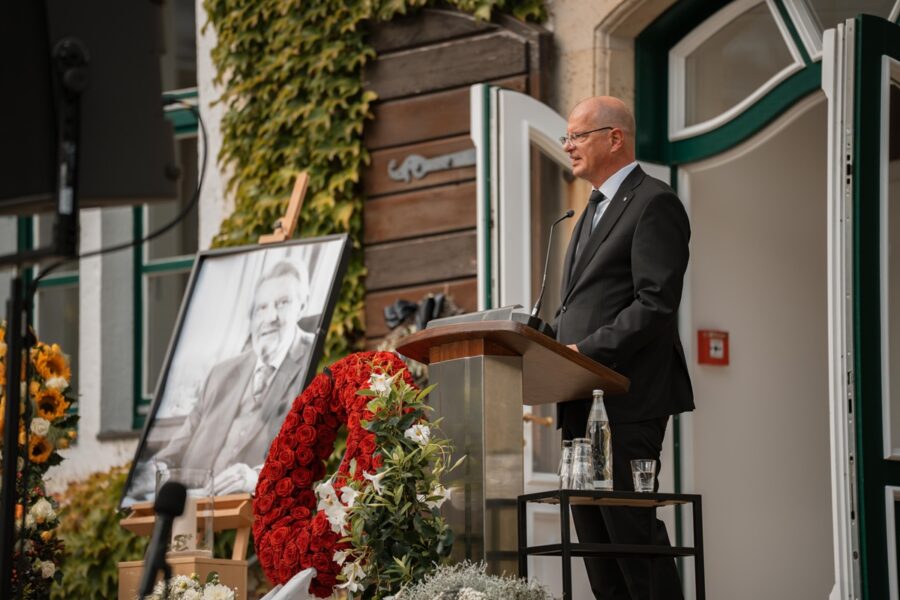
Paul Gauselmann was also a politically interested and outspoken person who sought dialogue. For Manfred Stoffers, he was a “fighter for freedom,” and Hermann Otto Solms, former vice president of the Bundestag and long-time FDP member of the Bundestag, spoke of decades of exchange and mutual sympathy. “Paul Gauselmann always wanted to bring the industry out of the grey area,” said the FDP honorary chairman. Georg Stecker, spokesman for the German arcade industry, also highlighted his contributions. “No one achieved so much for the industry,” Stecker emphasised. “He was a tech enthusiast and a doer.”
The participation of the North Rhine-Westphalia state government was conveyed by Anna Katharina Bölling, President of the Detmold administrative district: “North Rhine-Westphalia has lost a visionary entrepreneur.” There had hardly been a hospital, a school, a kindergarten, or a club in the region that did not benefit from his generosity. Meetings with the entrepreneur were always special for her. “He was not only a good speaker but also a good listener. Not many people have that.”
Ali Doğan, district administrator of the Minden-Lübbecke district, also highlighted Paul Gauselmann’s commitment to the community. “Paul Gauselmann was a true pillar of society.” In particular, the Mühlenkreiskliniken repeatedly received financial support. The deceased’s devotion to his homeland was emphasised by Espelkamp’s mayor Dr. Henning Vieker and Lübbecke’s mayor Philipp Knappmeyer. Paul Gauselmann was an honorary citizen of both towns and had endowed Espelkamp in his lifetime with a donation of over 8.7 million euros and Lübbecke with a grant of over five million euros. Both mayors stressed that Paul Gauselmann always saw himself as part of the community and naturally attended the weekly market or other city festivals.
As part of a community, Erhard Schiffner and Arthur Plate had also known the deceased. Erhard Schiffner, captain of the Espelkamp-Mittwald men’s 75 team, of which Paul Gauselmann was also a member, spoke of his tennis passion and team spirit. As long as he could, Paul Gauselmann regularly played on the tennis court and spent time with his teammates. This connection was also described by Arthur Plate, who experienced Paul Gauselmann once a month as part of his Doppelkopf rounds. “His schedule was always arranged with tennis and Doppelkopf in mind,” Plate recalled. “And true friendships were formed.”
This private facet of Paul Gauselmann showed that, alongside work ethic and ambition, there was also joy in the game that held a fixed place in his life. Or as Manfred Stoffers put it: “Paul Gauselmann was not only a great game-maker, but also a passionate player himself.”
By Focus Gaming News Editorial Team