Luxembourg plans gaming machines monopoly
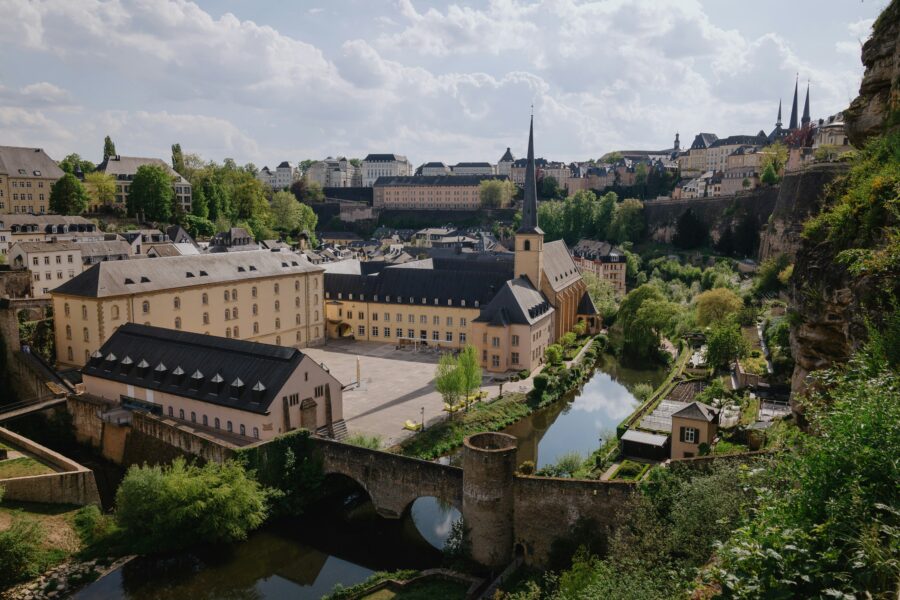

The Luxembourg National Lottery already has a monopoly over sports betting.
Luxembourg.- The Luxembourg National Lottery’s monopoly over gambling could be expanded under new legislation. Responding to parliamentary questions yesterday (October 30), justice minister Elisabeth Margue said the government has commenced reforms aimed at establishing a legal monopoly for the Luxembourg National Lottery and casinos. The move would prevent cafes from hosting many gaming machines.
The only legal land-based casino in Luxembourg is Casino 2000 in Mondorf-les-Bains, which is run by a joint venture between Partouche Group and Luxembourg Casino. However, many cafes host unregulated gaming machines.
Under the government’s proposal, cafés would face new restrictions and would only be allowed to host National Lottery machines. Other gaming machines, including skill-based gaming machines, would be prohibited.
As for online gambling, the minister said the government is considering the possibility of granting the sole land-based casino operator a licence to operate online casino gaming on a monopoly basis. However, the minister said several questions were still being considered, including around how to implement oversight and enforcement.
She said: “According to European case law, you can create such a monopoly, but then you must protect your citizens. There are also questions around geo-blocking. We are examining these issues internally with all concerned parties to determine what can be done, what must be done, and how far we should go if we proceed. These are complex questions, and discussions are ongoing.”
The minister was responding to a question from Luxembourg Socialist Workers’ Party (LSAP) MP Dan Biancalana, who had asked what action the government was taking to tackle the issue of gambling machines that had become common in cafés. He also asked whether legal measures were planned for online gambling and sports betting and called for the government to do more to try to prevent addiction.
On this latter issue, health minister Martine Deprez responded that the state has an agreement with the Centre for Excessive Behaviour and Behavioural Addictions (ZEV). She said that between 2020 and 2024, there had been an almost three-fold increase in the number of people seeking help for gambling problems, rising to 100 last year.
She said the vast majority of those seeking help were men, and she noted that the ZEV’s budget had been boosted from €220,000 in 2020 to €560,000 this year.
Last month, the Luxembourg National Lottery, the sole authorised sports betting operator in the country, suffered a cybersecurity incident that affected the IT systems of its sports betting provider and resulted in unauthorised access to player data. The breach included access to names, addresses and bank details.
The lottery said in a statement that the breach did not include access to any credit card information or passwords and only affected the loteriesport.lu sports betting site, not online gaming operations. The breach was notified to the National Data Protection Commission, and the lottery said that “urgent corrective measures” were being implemented with the affected subcontractor.
The European Gaming and Betting Association has previously noted that with Finland planning to open a licensed regulated gambling market next year, there will remain only three countries in Europe with no form of multi-licensing for gambling: Iceland and Norway retain state monopolies, while Luxembourg is the only country with no dedicated regulations for online gambling.