

Kate Puteiko, BGaming: “I think a successful game needs to show its appeal very quickly”
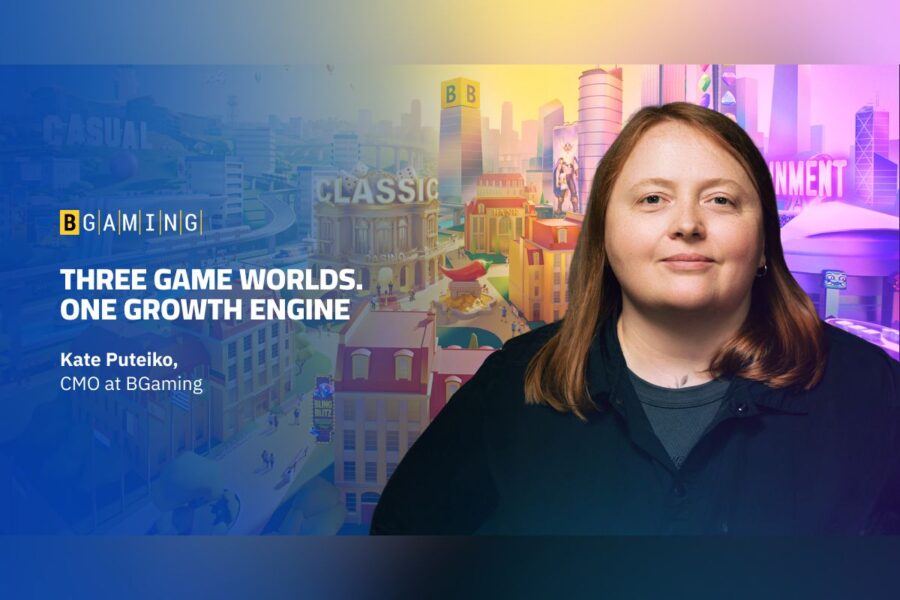

Kate Puteiko, CMO at BGaming, reveals details about the company’s upcoming attendance at SBC Summit Lisbon and talks about the “Three Game Worlds” concept.
Exclusive interview.- With the igaming market increasingly saturated with new releases, game studios face a different challenge: capturing players’ attention and giving them a reason to return. BGaming is addressing that challenge through a portfolio strategy built around three distinct game worlds: Casual, Entertainment and Classic.
At SBC Summit Lisbon, the studio will showcase the Three Game Worlds concept through dedicated zones focused on Burning Chilli X, Merge Up and Aviamasters 2, while sharing partner success stories that demonstrate the different roles each category can play. From acquisition and organic reach to retention and long-term player value, BGaming is positioning its portfolio around the needs of the wider player journey rather than individual game releases.
In this exclusive interview with Focus Gaming News, Kate Puteiko, CMO at BGaming, explains the thinking behind the Three Game Worlds strategy and the results supporting it, while discussing how the studio is using creator and sports collaborations to build stronger connections with audiences. She also explores what successful casino games will need to offer beyond mechanics and mathematics as competition for player attention continues to intensify.
With SBC Summit Lisbon bringing together such a broad international audience, what are BGaming’s main priorities for the event, and how will the Three Game Worlds concept shape your conversations with operators and partners?
We want partners to leave Lisbon with a clear understanding of the idea behind BGaming’s Three Game Worlds concept. We’ll share our partners’ success stories showing how these worlds come together as one growth engine: Casual supports acquisition, Entertainment drives organic reach and engagement, and Classic focuses on retention and long-term player value.
At BGaming’s booth B301, you’ll find a dedicated zone for each world, with activities connected to our top-performing titles in each category: Burning Chilli X, Merge Up, Aviamasters 2. Partners can experience the gameplay, see the results, and discuss where those games could fit into their business. I think having all of that in one place makes the conversation much more useful.
And, of course, we’re there to hear from operators themselves. SBC Summit brings together people working across very different markets and player audiences, making it a great opportunity to learn what works for them, what challenges they face, and how each of our three game worlds can support their goals. That direct feedback is incredibly valuable as we continue developing the concept.
Why did BGaming choose to structure its portfolio around Casual, Entertainment, and Classic games, and what distinct role does each world play in an operator’s growth strategy?
We all know how oversaturated the igaming market is with games. For operators, the key question is what each game can actually do for their business.
When we looked at this problem, we realised BGaming’s portfolio naturally falls into three game worlds, each with a clear role in the player journey.
Casual games are a strong acquisition tool. These instant-win and crash games are easy to pick up, often draw on familiar mobile or board game formats, and work well on mobile and under different connection conditions. That makes them a strong fit for onboarding, conversion, and scalable affiliate campaigns.
Entertainment slots work especially well when we think about how a game comes across on a stream. A distinctive mechanic, the build-up to a feature, or a moment people want to react to and share, can turn viewers into players and help operators reach digital-first audiences.
Classic slots are for players who value familiar gameplay, proven math, and an experience they enjoy returning to, helping operators drive retention and long-term player value.
The real strength lies in how the three worlds work together, helping operators support the full player journey from first contact to long-term engagement.
“We all know how oversaturated the igaming market is with games. For operators, the key question is what each game can actually do for their business.”
Kate Puteiko, CMO at BGaming.
BGaming is supporting the Three Game Worlds concept with partner success stories. What results best demonstrate how Casual, Entertainment, and Classic games perform in practice?
I’d pick three examples that show the Three Game Worlds concept works not only in theory but also in practice, and our partners’ results prove it.
A good example of how Casual games work in practice is Fishing Time. According to TopX data, around 50 per cent of players went on to play slots after trying the game. The game also generated $1.1m in revenue in Malaysia. This shows how Casual games work effectively as an entry point and even as a springboard into other game worlds.
In the Entertainment world, I’d highlight Merge Up 2. It has become one of our most consistent performers at Stake, appealing to both new and VIP players. Its distinctive Merge Up mechanic gives the game a very recognisable experience, which is a key to this game world.
Then there’s Hot Chilli Bells, a big hit in our Classic game world. At UpGaming, it ranked first among BGaming titles by bet value, GGR, and number of bets every month from April through June. Its day-seven retention was 229 per cent above the platform benchmark. That’s a very strong result when we talk about the role Classic games can play in retention.
That’s really what Three Game Worlds is about. It’s not about putting games into three different boxes; it’s about understanding the role each type of content can play in an operator’s business. These results show that there is real performance behind that thinking.
You recently said that “the real shortage today is attention, not content.” How does the Three Game Worlds strategy respond to this challenge, and what will differentiate the studios that succeed in an increasingly attention-driven market?
I think every game needs a clear reason for someone to spend time with it. You have to understand what interests the player, where they discover games, and what will make that experience worth returning to.
Three Game Worlds framework helps us answer those questions at an early stage. We start with the audience and the operator’s objective, then think about the experience that makes sense for both. That gives our creative decisions a clear direction rather than simply adding more content to an already crowded market.
Of course, AI has made it much easier to produce content, and as a result, more of it risks looking and feeling similar. That makes focus even more valuable. A recognisable creative identity, original ideas, and a strong understanding of player behaviour become real differentiators in that environment.
And I’d always look at a game over time. How is it performing once the launch campaign is over? Are players still discovering it? Are they coming back? Those questions help us understand whether we’ve created something with lasting value.
“I think every game needs a clear reason for someone to spend time with it.”
Kate Puteiko, CMO at BGaming.
BGaming has brought creators and sports figures directly into games through projects such as the custom Aviamasters™ edition with Jon Vlogs and Penalty Duel with Júlio César. Where do these collaborations fit within your wider strategy for acquisition, reach, and player engagement?
For BGaming, a collaboration works when there’s a natural connection between the celebrity, their audience, and what the player is actually doing in the game.
In the custom version of Aviamasters with Jon Vlogs, that connection comes through his travel lifestyle and the places his subscribers know from his content. Players fly through destinations such as São Paulo and Rio de Janeiro, recognising details from Jon’s world they already follow. That familiarity gives the game a more personal connection to his community.
In Penalty Duel with Júlio César, you’re literally facing a legendary Brazilian goalkeeper. The first-person perspective puts you inside that moment. Having Júlio César inside the gameplay makes that experience feel much more authentic and creates an immediate connection with football fans.
That’s where these projects fit into our wider strategy. Recognition sparks interest, and familiar references create an emotional bond with the audience.
So we look closely at audience fit, cultural relevance, and what the person can bring to the product. The number of subscribers is just one part of that picture. The collaboration needs to make sense when someone opens the game and starts playing.
Looking ahead, what will the next generation of successful casino games need to offer beyond mechanics and mathematics, and how will that shape the future development of BGaming’s three worlds?
I think a successful game needs to show its appeal very quickly. You should be able to open it on your phone and understand what’s interesting about it within a few moments. Then there needs to be enough personality and depth to keep that interest going.
Mechanics and math are important for sure; they’re the foundation. But the experience around them does matter: the setting, the characters, the rhythm, and little moments people want to share. Localisation is what makes that experience feel closer to the audience, especially when it draws on something people recognise and care about. That thinking already shapes our collaborations with influencers in Brazil.
Looking at our Three Game Worlds, for Casual, we want to keep that easy entry point and explore more depth through intuitive gameplay choices, with mobile accessibility at the core. In Entertainment, I see room for more interactivity, creator collaborations, and exciting moments that people enjoy watching. For Classic, we’ll continue developing familiar formats with a contemporary feel and refining the math that supports retention.
And we’ll keep learning from our partners. How players respond, how a title performs over time, and what it contributes to an operator’s business will guide the next steps for all three worlds.
By Focus Gaming News Editorial Team