NLGRB chief outlines vision for stronger gaming regulation in Uganda


Denis Mudene Ngabirano says regulation must support investment while keeping gambling within affordable limits and strengthening consumer protection.
Key takeaways:
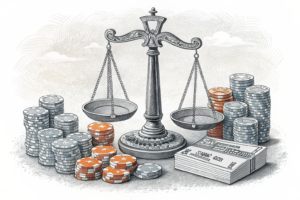
- NLGRB chief executive Denis Mudene Ngabirano says Uganda’s gaming regulation should balance industry growth with consumer protection, investor confidence and responsible gambling.
- He argues that regulation should create a predictable operating environment rather than focus solely on punishing non-compliant operators.
- Ngabirano says technology should support evidence-based regulatory decisions rather than become an end in itself.
- The NLGRB received 125 consumer complaints involving an estimated Shs266bn (US$62.7m) between FY2023/24 and FY2025/26 and resolved 112, a 90.5 per cent resolution rate.
- During FY2025/26, 32 people identified as problem gamblers received counselling, while 16,811 players sought self-exclusion.
Uganda.- National Lotteries and Gaming Regulatory Board (NLGRB) chief executive Denis Mudene Ngabirano has advocated for a regulatory approach that balances gaming industry growth with consumer protection, investor confidence, and responsible gambling in Uganda. In a feature published by Weekend Daily Monitor on Friday, October 30, 2026, Ngabirano outlined his vision for a regulator that uses technology, stronger enforcement, and stakeholder cooperation to address the challenges facing the country’s expanding gaming market.
The chief executive argued that regulation should extend beyond punishing non-compliant operators to creating a predictable business environment while protecting the public. He said: “When interests conflict, the starting point must be the law and the public interest. We must listen, examine the evidence and explain our decisions. Predictability helps businesses invest; fairness gives regulation credibility.”
He also emphasised the importance of technology in improving regulatory decisions, arguing that digital tools should help the Board make evidence-based assessments rather than serve as an end in themselves.
Ngabirano said consumer protection must remain central to the industry’s expansion, warning against gambling becoming a substitute for employment or a reason for people to risk money meant for essential household expenses. He stressed the need for public education about gambling risks, particularly as betting becomes increasingly accessible through mobile applications. He said consumers should understand the importance of affordable spending limits and self-exclusion.
Between FY2023/24 and FY2025/26, the Board received 125 consumer complaintss involving an estimated Shs266bn (US$62.7m) and resolved 112, marking a 90.5 per cent resolution rate. During FY2025/26, 32 people identified as problem gamblers received counselling, while 16,811 players sought self-exclusion.
On institutional accountability, Ngabirano said the Board must hold itself to the same standards of accountability it expects from licensed operators, allowing stakeholders to assess its performance against its service commitments. He also stressed that cooperation between government agencies and industry stakeholders was essential to effective regulation, particularly in tackling illegal gambling and emerging risks.
Ngabirano said his longer-term objective was to leave behind an institution with capable personnel, reliable systems and accountable processes that would continue to function effectively beyond his leadership.
Frequently asked questions (FAQs)
- Who is Denis Mudene Ngabirano? Denis Mudene Ngabirano is the chief executive of Uganda’s National Lotteries and Gaming Regulatory Board (NLGRB).
- What is Ngabirano’s vision for gaming regulation in Uganda? He advocates a regulatory approach that balances industry growth with consumer protection, investor confidence and responsible gambling. He says regulation should create a predictable environment for businesses while protecting the public.
- How many gambling complaints has the NLGRB handled? Between FY2023/24 and FY2025/26, the Board received 125 consumer complaints involving an estimated Shs266bn (US$62.7m) and resolved 112, a 90.5 per cent resolution rate.
- What does the NLGRB say about self-exclusion? Ngabirano says consumers should understand affordable spending limits and self-exclusion. During FY2025/26, 16,811 players sought self-exclusion and 32 people identified as problem gamblers received counselling.